


By Kai Ioh and KE TEAM Hawaii
Kai Ioh is a luxury real estate advisor based in Kona, Hawai‘i, specializing in second home, resort, and ultra-high-net-worth markets across the Big Island.
Key Takeaways
-
This page explains why the most successful home sales on the Big Island are often shaped before a property appears on MLS.
-
It is most relevant for sellers in Kona, the Kohala Coast, and other Hawai‘i Island markets where property condition, permits, wastewater systems, and title issues can materially affect a sale.
-
The central idea is simple: preparation before launch gives sellers more control over pricing, buyer confidence, negotiation leverage, and escrow risk.
-
In the context of Hawai‘i, pre-market work matters more than many mainland sellers expect because local property issues can be more varied, more technical, and more location-specific.
-
Over time, experienced listing teams tend to treat pre-listing due diligence as the main event, not a side task.
Why the Best Home Sales Start Before MLS on the Big Island
In Kona and across the Kohala Coast, the best home sales often start before MLS because that is the stage when sellers still have the most control. Before a listing becomes public, a seller can identify risks, improve presentation, verify information, and shape a cleaner disclosure strategy. Once buyers begin inspections, that control starts to shift.
Many sellers assume the real work begins when the property goes live. In practice, that is often when the process becomes reactive. Inspection findings, repair requests, title questions, permit concerns, wastewater issues, and pricing pressure can all emerge after launch.
At KE TEAM Hawaii, we take a different view. The strongest outcomes usually come from preparation first and exposure second.
What Changes When a Listing Team Has More Experience?


KE TEAM Client appreciation cruise 2026
Experience changes how risk is handled.
Over the years,Emil and I have been involved in more than 600 real estate transactions across the west side of the Big Island. That kind of repetition creates pattern recognition. You begin to see which issues are likely to surface, which specialists to involve, and which questions need answers before a buyer ever writes an offer.
Early in any real estate career, some transactions go smoothly because the property is simple or because timing is favorable. But luck is not a strategy.
In our experience, sellers and agents do not benefit from hoping that problems stay hidden until escrow. A transaction closes only when the process holds together through inspections, disclosures, financing, title, and final performance.
That is why we prepare early.
Why Is the Pre-Market Phase So Important?
The pre-market phase is important because it is the one part of the sale where the seller and listing team can still shape the conditions of the transaction.
This phase affects:
-
First impressions
-
Buyer confidence
-
Pricing strength
-
Negotiation leverage
-
Risk reduction
-
Escrow smoothness
Once a property is public, buyer activity begins to influence the pace and tone of the transaction. Showing feedback, inspection schedules, repair requests, appraisals, and market perception all begin to matter immediately.
In the context of Hawai‘i, this matters even more. Unlike many mainland markets, Big Island properties often have location-specific variables that can affect value and buyer comfort. Those details are better addressed before launch than defended later.
What Is the KE TEAM Hawaii 7-Step Listing Process?


Kai Ioh and Emil Knysh, Compass Big Island
1. Seller Consultation and Property Evaluation
We begin with the seller’s goals, timing, and constraints.
From there, we walk the property together to assess its strengths, likely buyer appeal, and any conditions that may need attention before the home goes public. We also discuss what buyers currently expect in that specific price segment.
This is not only about presentation. It is also about identifying what could weaken leverage later.

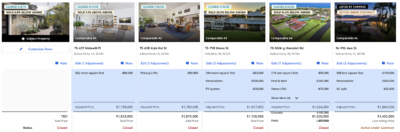
Cutting edge Compass CMA
2. Market, Pricing, and Marketing Strategy
Next, we study comparable sales, active competition, and pending market behavior.
That analysis helps define three things: the likely buyer profile, the positioning strategy, and the pricing approach. A property does not perform in isolation. It performs in relation to competing inventory, buyer psychology, and timing.
Pricing is not just a number. It is part of the negotiation structure.
3. Listing Preparation
This is where much of the real protection happens.
Pre-listing preparation often includes a home inspection, targeted repairs, and a disclosure strategy designed to reduce surprises. We also review issues that commonly disrupt escrow on the Big Island, including:
-
Wastewater or septic systems
-
Permit history and square footage verification
-
Zoning considerations
-
Flood zone questions
-
Preliminary title review
Our internal preparation checklist includes more than 40 items.
Unlike a rushed listing process, this stage gives the seller time to make decisions before pressure builds.
4. Presentation and Showing Plan
Presentation shapes first impressions, but it also shapes buyer confidence.
When appropriate, we coordinate staging or design support and produce visual assets that match the quality of the property. This includes professional photography, aerial imagery, video, and digital walkthroughs.
Equally important is the narrative. Every home has a context. On the Big Island, that context may include elevation, view plane, climate, privacy, architecture, or proximity to resort and lifestyle amenities. The marketing story should explain the property clearly, not just decorate it.
5. Pre-Marketing
Pre-marketing is where we refine before broad exposure.
This phase allows us to finalize documents, improve disclosures, test the presentation, and build early momentum without creating unnecessary Days on Market. That distinction matters because public market time can influence how buyers interpret value and negotiating strength.
Pre-marketing also gives us room to fix what still needs fixing.
6. Full Launch and Negotiation
When the property goes live, it needs to be ready.
In today’s market, listing information is distributed across many platforms almost instantly. Buyers, agents, and search systems often see a property within minutes. That makes accuracy at launch essential.
A polished launch usually includes structured showings, negotiation planning, and a pricing position designed to create momentum.
The goal is not simply to attract the highest number on paper. It is to secure strong terms, confident buyers, and a path to closing that holds up under scrutiny.
7. Escrow Management and Closing
A good listing strategy does not stop at the contract.
Once a property is in escrow, the work shifts toward coordination. We stay proactive with escrow officers, title companies, inspectors, contractors, and vendors so that we carry the administrative burden.
A smoother closing is usually the result of earlier preparation, not last-minute problem-solving.
What Problems Can Pre-Listing Due Diligence Catch Early?
Pre-listing due diligence can surface issues that would otherwise appear during buyer inspections or lender review.
Recent examples from our work include:
-
Missing septic tank documentation
-
An encroachment
-
A water meter spinning during a visual check
-
Active termites discovered before launch
-
Square footage that had not been properly permitted
Each of these issues could have triggered delay, renegotiation, or loss of buyer confidence if discovered later.
Addressed early, they become manageable. Addressed late, they often become leverage for the buyer.
Why Do Buyer Inspections Cause So Many Canceled Deals?
Buyer inspections cause so many canceled deals because they compress uncertainty into a short period with money at stake.
Once buyers discover an unexpected issue, several things can happen quickly. They may request repairs, demand credits, reduce their offer, or decide the risk is no longer worth it. Even when the issue is not severe, uncertainty can change the emotional tone of the transaction.
In our experience, many canceled transactions are tied to inspection findings that could have been identified earlier. That does not mean every issue should be repaired in advance. Some issues are irrelevant. It means the seller should know what exists and decide how to address or disclose it strategically. Of course, not all property needs a pre-listing inspection. This is why we develop a good marketing strategy up front.
Why Does This Matter More on the Big Island?
The Big Island is not a simple or uniform market.
Hawai‘i Island contains 10 of the world’s 14 major climate zones, along with many microclimates. Even within Kona, property risk can vary materially by elevation, exposure, neighborhood, and use.
For example:
-
Oceanfront properties may have different maintenance and environmental exposure issues.
-
Resort properties often involve HOA rules, design review standards, and ownership considerations.
-
Kona coffee estates may involve agricultural zoning, water systems, and land use questions.
These are not unusual details in Hawai‘i. They are part of the practical reality of selling property here.
Unlike more standardized mainland suburbs, Big Island homes often require location-specific review before they can be positioned confidently.
What Do Sellers Often Misunderstand About MLS?
A common misconception is that MLS creates the result.
MLS creates exposure. It does not, by itself, create readiness.
If the property is well prepared, correctly positioned, and clearly documented, the MLS can amplify its strengths. If the property is underprepared, MLS can amplify uncertainty just as quickly.
That is why the best home sales start before MLS. The public launch is important, but the groundwork underneath it matters more.
How Should Sellers Think About Choosing a Listing Team?
A useful way to think about choosing a listing team is to ask what kind of process the team is built to handle.
Some teams are primarily designed to publish a listing and respond to what happens next. Others are designed to identify risks early, build buyer confidence, protect pricing, and manage the transaction through closing.
Those are different models.
For sellers on the Big Island, especially in Kona and along the Kohala Coast, that difference can be meaningful because so much of the transaction depends on what is discovered and clarified before the home is fully exposed to the market.
Final Thoughts
Over the years, one pattern has remained consistent in Hawai‘i real estate: smoother sales tend to begin with stronger preparation.
The period before MLS is not a waiting room. It is often the most strategic phase of the entire listing. It is where sellers can improve certainty, reduce preventable surprises, and enter the market from a position of strength.
Every home is different. Every seller timeline is different. But the principle is remarkably consistent.
The best home sales start before MLS.
————————
Frequently Asked Questions
What does “before MLS” mean in home selling?
It refers to the preparation period before a property is publicly listed on the Multiple Listing Service. This stage often includes pricing strategy, inspections, repairs, disclosure planning, visuals, and documentation review.
Why do the best home sales start before MLS?
Because that is when the seller has the most control. Before launch, the seller can identify risks, improve presentation, and reduce issues that may weaken leverage later.
Is MLS still important?
Yes. MLS is the main exposure tool for most residential listings. The point is not that MLS is unimportant. The point is that MLS works best when the property is already prepared.
What is pre-listing due diligence?
Pre-listing due diligence is the review process done before the home goes live. It can include inspections, title review, permit checks, wastewater review, and verification of key property details.
Why do buyer inspections cause deals to fall apart?
Inspections can reveal problems the buyer did not expect. That can lead to repair demands, renegotiation, loss of confidence, or cancellation.
Should every seller do a pre-listing home inspection?
Not always, but many sellers benefit from one. It depends on the property, its condition, and the seller’s strategy. The key is understanding likely issues before the buyer discovers them first.
Why is selling a home on the Big Island different from selling on the mainland?
Big Island properties often involve more location-specific variables, including climate exposure, wastewater systems, permit history, zoning, and microclimate differences. These factors can affect both marketing and escrow.
Why does local expertise matter in Kona and the Kohala Coast?
Because property conditions and transaction risks can vary significantly by area and property type. Local experience helps identify issues earlier and position the property more accurately.
What is the main goal of pre-market preparation?
The main goal is to reduce surprises while strengthening pricing, buyer confidence, and the likelihood of a smoother escrow.
Does pre-marketing help avoid unnecessary Days on Market?
Yes. It allows a team to refine presentation and documentation before public launch, which can help avoid weak first impressions and unnecessary time on market.