



By Kai Ioh and KE TEAM Hawaii
Kai Ioh is a luxury real estate advisor based in Kona, Hawai‘i, specializing in second home, resort, and ultra-high-net-worth markets across the Big Island.
Key Takeaways
- This guide explains how to read and interpret your Hawaii County Real Property Assessment Notice.
- It is most relevant for property owners on the Big Island, including Kona and the Kohala Coast.
- The difference between market value and assessed value directly affects your property taxes.
- Hawaii’s system includes assessment caps and exemption structures that impact long-term ownership.
- Reviewing your notice carefully each year helps ensure accuracy and prevents overpayment.
What Is the Hawaii County Property Tax Assessment Notice?
As I did, you may have recently received your Real Property Assessment Notice in the mail.
At first glance, it can feel a bit confusing. I get that question every year.
Just to clarify—this is not a bill. It’s the county’s assessment of your property as of January 2026, and it’s what your real property taxes will be based on.

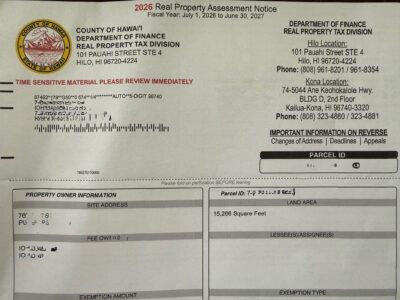
2026 Hawaii County Real Property Assessment Notice
The actual tax bill comes later, with a payment deadline of August 20. The appeal deadline, however, is April 9, so it tends to come up faster than expected.
If something doesn’t look right, it’s worth taking a closer look early. In some cases, even a quick conversation with the County Real Property Appraiser can help clarify, or sometimes lead to a re-evaluation.
That said, before taking any action, the first step is understanding where your property stands today.
So let’s walk through it together.
Each year, property owners across the Big Island, including Kona and the Kohala Coast, receive this notice from the County of Hawai‘i. It outlines:
- The county’s opinion of your property’s value
- Your taxable (assessed) value
- Any exemptions applied
- Your property classification
Once you understand these pieces, the rest starts to make a lot more sense.
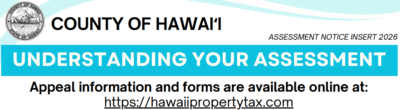

What Is the Difference Between Market Value and Assessed Value?
This is probably the most common question I hear.
What does “market value” mean?
Market value is the county’s estimate of what your property would sell for in today’s market.
In Kona and along the Kohala Coast, this number can move around depending on:
- Buyer demand
- Inventory levels
- Activity in the luxury and second-home market
It’s a model-based estimate—not necessarily what your home would sell for—but it gives a general benchmark.
What does “assessed value” mean?
Assessed value is what your property taxes are actually based on.
And in many cases, especially if you’ve owned your home for a while, this number is quite a bit lower than market value.
That’s by design.
Why Is There a 3% Cap for Owner-Occupied Homes?
This is one of the most important parts of the system—and one that benefits long-term homeowners.
If your home qualifies as owner-occupied:
- Your assessed value can only increase by up to 3% per year
Why does this matter?
Over time, this creates a meaningful gap between:
- What your home is worth (market value)
- What you’re taxed on (assessed value)
I’ve seen many cases here in Kona where longtime homeowners are paying taxes based on values far below current market levels.
That consistency is intentional. It helps make ownership more predictable, even as market values change.
What Are Homeowner Exemptions and Why Do They Matter?

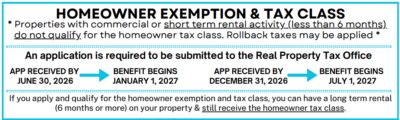
Hawaii County Home Owner Exemption
If this is your primary residence, this is an area worth double-checking.
What is a homeowner exemption?
It’s a reduction in your taxable value.
Simple as that—and it can make a noticeable difference in your annual tax.
What types of exemptions are available?
Depending on your situation, you may qualify for:
- Homeowner (primary residence)
- Age-based exemptions
- Disability exemptions
- Veteran exemptions
- Other special programs
What should you look for?
This is where small details matter.
Make sure:
- Your exemption is applied correctly
- Your residency status reflects your current situation
- You’ve applied if you recently moved
I do see cases where exemptions are missed or outdated—and that can lead to paying more than necessary.
What Should You Review on Your Assessment Notice?
This part doesn’t take long, but it’s worth doing every year.
1. Are your exemptions correct?
Start here. It’s often the simplest thing to fix.
2. Is your property classification accurate?
Your classification directly affects your tax rate.
Typical categories include:
- Residential
- Homeowner
- Agricultural
- Short-term rental
If this is off, your tax bill can be higher than expected.
3. Do the values look reasonable?
Take a quick look at:
- Market value
- Assessed value
- Taxable value
If something feels off compared to what you’re seeing in the market, it may be worth digging a bit deeper.
How Do Rental Rules Affect Property Taxes in Hawaii County?
This is especially relevant here in Kona and resort areas.

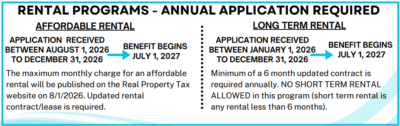
Hawaii County Rental Programs Annual Application
Short-term rentals
- Rentals under 6 months generally do not qualify for homeowner classification
- These are typically taxed at higher rates
Long-term rentals
- Rentals of 6 months or longer may still qualify
- But requirements need to be met
I’ve seen some confusion here, particularly with second homes, so it’s worth confirming how your property is classified.
Can Agricultural Use Reduce Your Property Taxes?
Yes—but it’s not automatic.
How does it work?
If your property is actively used for agriculture:
- You may qualify for a reduced tax rate
- You’ll need to apply and meet specific criteria
A few things to keep in mind
- Applications are required
- Deadlines matter (for example, some programs require submission by September 1, 2026)
- Ongoing compliance is part of the process
There are also related programs like:
- Native forest dedication
- Solar-related incentives
- Non-profit exemptions
These can be helpful, depending on how your property is used.
What If You Disagree with Your Property Assessment?
This does come up from time to time.
When should you take a closer look?
- If the market value feels too high
- If comparable properties suggest a different range
- If there are errors in the property details
What’s the timeline?
- Appeal deadline: April 9, 2026
- Late appeals are generally not accepted
It’s a firm deadline, so if you’re considering it, don’t wait too long.
Final Thoughts
The system here is designed to balance two things:
- Reflecting current market conditions
- Providing stability for property owners over time
In Kona and across the Big Island, where values can shift with global demand, that balance matters.
For most homeowners, this notice is easy to set aside—but it’s actually one of the more important documents you’ll receive each year.
A quick review can make sure:
- You’re not overpaying
- Your property is correctly classified
- You’re receiving all the benefits available to you
If you’re unsure about anything, it’s always worth taking a closer look.
County of Hawaii Assessment Notice Insert 2026 Link
Kai Ioh | KE TEAM HAWAII
Frequently Asked Questions
What is the Hawaii County property tax assessment notice?
It is an annual document that shows your property’s market value, assessed value, exemptions, and classification used to calculate your taxes.
Why is my assessed value lower than my market value?
For owner-occupied homes, increases are capped at 3% per year, which creates a gap over time.
Do I need to apply for a homeowner exemption every year?
No, but you need to apply initially and update your status if anything changes.
Can rental properties qualify for homeowner tax rates?
Only long-term rentals (6 months or more) may qualify if requirements are met.
What happens if my property classification is wrong?
You may be taxed at a higher rate, so it’s important to review it annually.
How do I appeal my property assessment?
You must file an appeal with the county by April 9, 2026.
Can agricultural use reduce my taxes?
Yes, but you must apply and meet eligibility requirements.
Why does Hawaii cap assessed value increases?
To provide long-term stability for homeowners.
What is the most common mistake homeowners make?
Not checking exemptions or classification.
Is the county’s market value always accurate?
Not always. It’s an estimate based on available data and models.