


By Kai Ioh and KE TEAM Hawaii
Kai Ioh is a luxury real estate advisor based in Kona, Hawai‘i, specializing in resort and ultra-high-net-worth markets across the Big Island.
Key Takeaways
-
Each winter, humpback whales return to the waters off Kona and the Kohala Coast as part of a long migration from Alaska.
-
Whale watching is less about spectacle and more about patience, imagination, and perspective.
-
The waters off Kona are part of the Hawaiian Islands Humpback Whale National Marine Sanctuary, established to protect whales during their most vulnerable season.
-
Hawai‘i serves as a place of rest and renewal for humpbacks, not a feeding ground.
-
Living on the Big Island often means continuing to learn—sometimes about places we thought we already understood.
A Winter Moment Offshore Kona
Every winter on the Big Island, something special happens offshore.
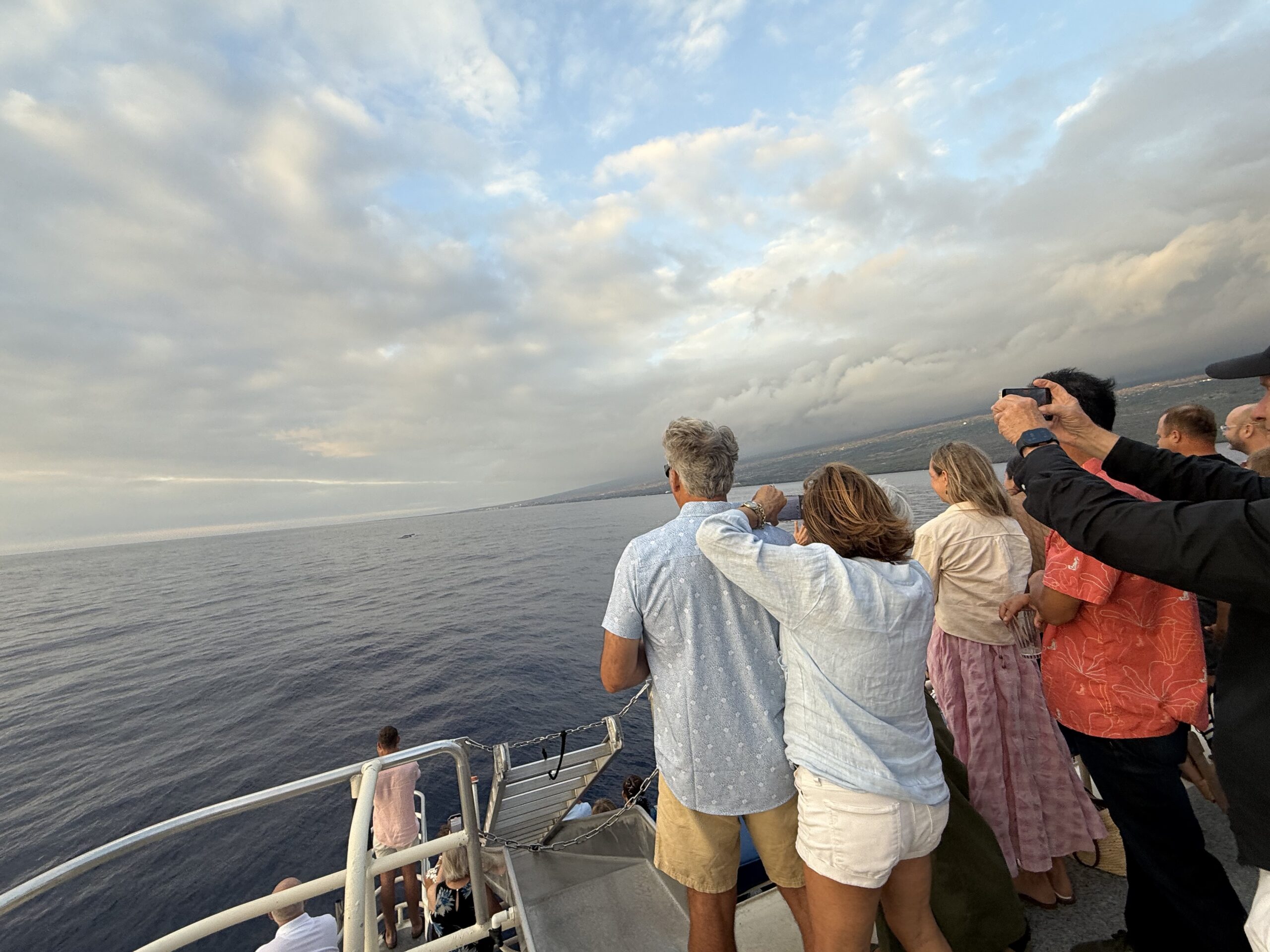
We were recently out on our annual KE Team whale watch cruise off the coast of Kona and were rewarded with the sight of three humpback whales. Watching them surface, glide, and quietly disappear back into the blue never gets old. Even after living here for many years, moments like that still stop me in my tracks.
I’ll admit something a little embarrassing. I only recently learned that the waters off Kona and the Kohala Coast are part of the Hawaiian Islands Humpback Whale National Marine Sanctuary. I always knew these waters were important, but I didn’t fully appreciate the scale of protection or the history behind it.
It was a good reminder that living in Hawai‘i often means continually learning something new about the place we call home.
My Early Days as a Whale Watching Guide
When I first moved to Hawai‘i, I worked as a whale watching boat guide. It was one of those early island jobs that quietly shaped how I see the ocean—and maybe life in general.
Whale watching isn’t about constant action. It’s about patience and imagination.
Most of the time, you don’t see a full whale. Unless one breaches, you’re often watching the curve of a mother’s back, the small roll of a calf, or the gentle exhale of a spout drifting across the water.
As guides, we would help guests imagine what they couldn’t see.
The length of the whale beneath the surface.
The long journey it took to get here.
The vastness of the ocean around us.
Standing on a boat, seeing just a portion of an animal that can reach nearly 50 feet long, gives you perspective. You start to understand how small we all are compared to the ocean. And how connected we are through it.
These whales swim here from Alaska. That experience stayed with me, and it’s one reason whale season still feels meaningful every year.
What Is the Hawaiian Islands Humpback Whale National Marine Sanctuary?
The Hawaiian Islands Humpback Whale National Marine Sanctuary was established in 1992 to protect humpback whales and their critical habitat in Hawaiian waters.
The sanctuary spans thousands of square miles around the main Hawaiian Islands, including the waters off Kona and the Kohala Coast. These warm, relatively shallow waters are essential during the winter months, when humpback whales migrate here to breed, give birth, and nurse their calves.
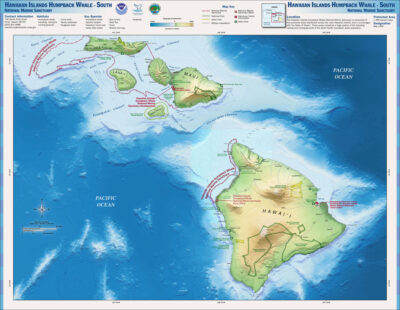
Hawaiian Islands Humpback Whale National Marine Sanctuary- https://hawaiihumpbackwhale.noaa.gov/
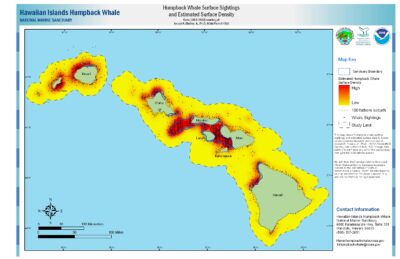
Hawaii Whale Density https://hawaiihumpbackwhale.noaa.gov/
Unlike Alaska, where whales feed, Hawai‘i is a place for renewal. The sanctuary exists to reduce risks such as vessel strikes, entanglement, and excessive human disturbance, while also supporting research, education, and responsible ocean use.
For those of us who live here, it’s reassuring to know that the waters we enjoy are also carefully protected.
The Long Migration to Hawai‘i
Every year, humpback whales complete one of the longest migrations of any mammal on Earth.
They travel nearly 3,000 miles from the cold, nutrient-rich waters of Alaska to the warm waters of Hawai‘i. They don’t come here to eat. They come here to give birth and raise their young in calmer, safer conditions.
Whale season in Hawai‘i generally runs from December through April, with peak sightings between January and March. During this time, it’s not unusual to spot whales from shore along the Kona Coast or while walking beaches on the Kohala Coast.
Knowing the distance they travel—and the energy it takes—makes every sighting feel earned. It’s not just a spectacle. It’s a reminder of endurance and instinct on a massive scale.
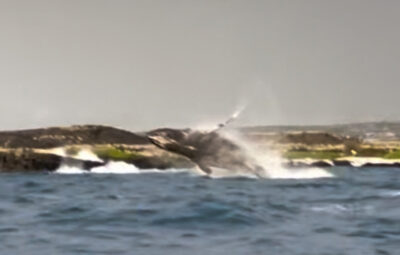
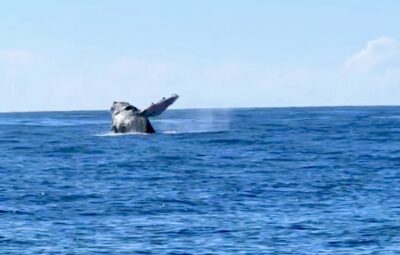
A whale off Kona Coast
From Near Extinction to Protection
Humpback whales were once hunted nearly to extinction during the commercial whaling era. By the mid-20th century, their numbers had fallen dramatically.
Thanks to international protections, conservation efforts, and sanctuaries like Hawai‘i’s, humpback whales have made a remarkable recovery. While challenges remain, their return each winter is one of the more hopeful stories in marine conservation.
The sanctuary represents a long-term commitment to making sure future generations can witness this migration, just as we do today.
Whales and Hawaiian Cultural Meaning
In Hawaiian culture, the humpback whale—koholā—holds deep meaning.
Whales are often regarded as ‘aumakua, or family guardians, and are associated with protection, guidance, and ancestral connection. The relationship between Hawaiians and the ocean has always been rooted in respect, observation, and balance.
When whales return to Hawaiian waters each winter, it isn’t only a natural event. It’s a cultural one. Their presence reinforces the idea that the ocean is alive, powerful, and deserving of care.
Living here, you begin to understand that stewardship isn’t optional. It’s part of the lifestyle.
Why This Matters Along the Kona and Kohala Coast
One of the privileges of living on the Big Island is proximity to nature that still operates on its own terms.
Seeing whales offshore during winter months is a reminder that this isn’t just a beautiful place to visit. It’s a living ecosystem. Whether we’re watching from a boat, a shoreline trail, or even a lanai, we’re sharing space with something much larger than ourselves.
Understanding the sanctuary adds depth to the experience. A whale sighting becomes more than a moment—it becomes part of a larger story of migration, protection, and connection.
Final Thoughts
Seeing those three humpback whales on our recent KE Team cruise brought everything full circle for me.
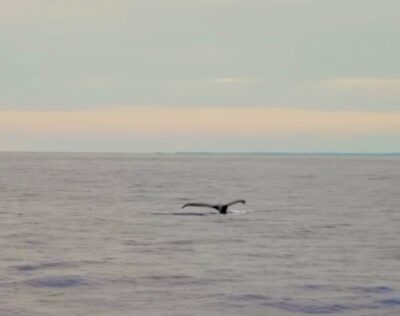
The actual whale we saw at KE Team Cruise 2026
From my early days guiding whale watch boats to now sharing these moments with clients and friends, the feeling remains the same.
We rarely see the whole whale.
But if we take a moment to imagine what lies beneath the surface, the experience becomes much richer.
More information on the sanctuary.
Kai Ioh | January 2026
Frequently Asked Questions
When is whale season in Kona?
Whale season typically runs from December through April, with peak sightings between January and March.
Why do humpback whales come to Hawai‘i?
They migrate to Hawai‘i to breed, give birth, and nurse their calves. They do not feed while here.
Are the waters off Kona protected?
Yes. The Kona and Kohala Coast waters are part of the Hawaiian Islands Humpback Whale National Marine Sanctuary.
Can whales be seen from shore?
Yes. During peak season, whales are often visible from shoreline viewpoints along the Kona and Kohala Coast.
How far do humpback whales travel?
They migrate nearly 3,000 miles from Alaska to Hawai‘i each year.
What does koholā mean?
Koholā is the Hawaiian word for humpback whale and is often associated with ancestral guardianship.