


Executive Summary
- This page explains Hawai‘i County’s new Long-Term Rental (LTR) property tax classification for Big Island homes.
- It is relevant for property owners, investors, and landlords renting homes for six months or longer.
- The change matters because it may reduce property tax burdens for qualifying long-term rental owners.
- The policy reflects Hawai‘i County’s effort to stabilize long-term housing supply on Hawai‘i Island.


A home in Kona Vistas – Long-term rental property sold by KE Team
Understanding Hawai‘i County’s New Long-Term Rental Tax Class
Hawai‘i County is implementing a new property tax category specifically for long-term rentals. This is the first time
long-term rental housing is being separated from investor residential and short-term rental classifications. The change
applies across the Big Island, including Kona and the Kohala Coast.
The Long-Term Rental (LTR) class is designed for homes rented to the same tenant for six months or longer. While the final
tax rate has not yet been published, it must be set by June 20, 2026.
Why Hawai‘i County Created the Long-Term Rental Classification


County of Hawaii AKA Big Island
Hawai‘i Island continues to face limited long-term housing supply. Many homes are categorized as second homes or short-term
rentals, even when they could support stable year-round occupancy.
By creating a dedicated LTR class, the County is formally recognizing owners who provide long-term leases and signaling a
policy preference for housing stability. The intent is to separate long-term housing from short-term visitor use and to offer
a path to a more favorable tax treatment for qualifying properties.

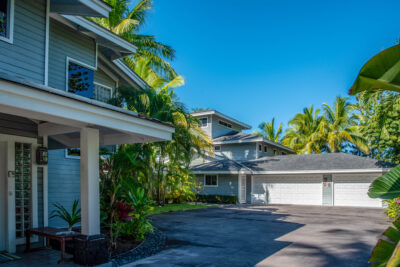
Kona Bay Estates homes sold by KE Team
How Long-Term Rental Classification Works
To qualify for the LTR tax class, a property must meet several conditions:
- All units on the property must be rented for longer than 180 days.
- The rental period must be to the same tenant for the full term.
- Owners must apply annually before December 31.
- A current, signed long-term lease is required with the application.
- Properties valued above $2 million (net taxable) are not eligible.
Vacancy, Renovation, and Allowable Exceptions
Hawai‘i County also recognizes normal ownership and property management realities. If a home is under renovation or activelylisted for a long-term tenant, the County may allow up to 12 months of vacancy with proper documentation.
Documentation should clearly show either renovation activity or ongoing long-term rental marketing during the vacancy period.
Keeping organized records reduces risk if the classification is reviewed.
How This Impacts Your Taxes
Until the LTR rate is published, most long-term rentals are taxed under the standard Residential class in Hawai‘i County:
- $11.10 per $1,000 of assessed value up to $2,000,000 (equals 1.11%)
- $13.60 per $1,000 of assessed value above $2,000,000 (equals 1.36%)
Affordable Rental Housing (ARH) Comparison
If your long-term rents qualify as “affordable,” you may be eligible for Hawai‘i County’s Affordable Rental Housing (ARH) classification. ARH is separate from the new LTR class and typically requires compliance with rent limits and program rules.
The ARH rate is currently around $5.95–$6.15 per $1,000 of assessed value, which is significantly lower than the standard Residential rate.
Where the New LTR Rate May Land
The County has not announced the final LTR rate yet. Based on early signals, the LTR rate is expected to be more favorable
than the “Residential–investor” category used by many long-term rentals today.
Once finalized, the LTR rate is expected to sit somewhere between the standard Residential rate and the ARH rate. For some owners on the Big Island—especially in high-value areas like Kona and the Kohala Coast—this could affect annual cash flow and long-term planning.
Important: Know the Penalties
If a property is rented for less than six months—or even advertised as a short-term rental—Hawai‘i County may remove the LTR classification and impose retroactive taxes plus a 10% penalty.
The practical takeaway is that compliance is not only about lease length. Marketing language, platform listings, and proof of long-term intent matter. Keep documentation current and ensure the property’s use aligns with the classification.
Practical Preparation for Big Island Property Owners
If you or your clients own long-term rentals, steps that reduce risk include:
- Review lease terms to confirm six-month minimum occupancy.
- File the annual LTR application before December 31.
- Maintain a current, signed lease and renewal records.
- Keep proof of renovation activity or long-term rental marketing if the property is temporarily vacant.
- Avoid any short-term rental advertising or activity.
As Hawai‘i County approaches the June 20, 2026 deadline to set the LTR rate, additional implementation details may be released. Tracking updates matters for owners evaluating tax exposure, rent strategy, and long-term holding costs.
Frequently Asked Questions (FAQ)
What is the Hawai‘i County Long-Term Rental tax class?
It is a new property tax classification for homes rented to the same tenant for six months or longer on Hawai‘i Island.
When will the LTR tax rate be announced?
Hawai‘i County must finalize and publish the rate by June 20, 2026.
Are properties over $2 million eligible?
No. Properties with net taxable values above $2 million do not qualify for the LTR class.
Do owners need to apply every year?
Yes. Owners must submit an annual application before December 31.
Do all units on the property need to be long-term rented?
Yes. To qualify, all units on the property must be rented for longer than 180 days.
Can a vacant property still qualify?
Yes. If the home is under renovation or actively listed for a long-term tenant, the County may allow up to 12 months of
vacancy with proper documentation.
What happens if I rent short-term?
The County may revoke the classification and impose retroactive taxes plus a 10% penalty if the home is rented for less than
six months or advertised for short-term use.
Is the LTR rate the same as Affordable Rental Housing?
No. ARH is a separate classification with different eligibility rules and typically lower tax rates.
Does advertising matter?
Yes. Advertising a property as a short-term rental can disqualify it from the LTR classification.
As the County approaches the 2026 deadline, we expect more updates. Our team will continue monitoring the policy changes and sharing clear, practical summaries.
If you have a property you’d like us to analyze, or need help understanding how these tax changes may affect market value, cash flow, or future planning, we’re here to support you.
Author Bio
Kai Ioh is a luxury real estate advisor based in Kona, Hawai‘i, specializing in resort and ultra-high-net-worth markets across the Big Island.