



By Kai Ioh and KE TEAM Hawaii
Kai Ioh is a luxury real estate advisor based in Kona, Hawai‘i, specializing in second home, resort, and ultra-high-net-worth markets across the Big Island.
Key Takeaways
-
A recent alleged deed forgery case on O‘ahu highlights structural vulnerabilities in Hawai‘i’s recording system.
-
The Hawai‘i Bureau of Conveyances records about 344,000 documents annually but does not verify legal validity.
-
Most scams typically target vacant land, especially lots outside monitored subdivisions.
-
Ultra-private resort communities with controlled access are generally less attractive targets.
-
Property Watch is a free tool that helps detect suspicious recordings early.
What Happened on O‘ahu?
A recent criminal case on Oahu brought attention to alleged deed forgery involving multiple properties.
According to the news, forged signatures were allegedly used to record fraudulent deeds and to attempt to resell properties without lawful ownership.
Vacant and rundown properties were reportedly targeted.
This was not a misunderstanding over civil paperwork. It involved forgery and identity theft.
As someone who has worked in Kona and across the Big Island for more than two decades, I share this not to create alarm, but to create awareness.
Understanding how the system works is the first step.
How the Hawai‘i Recording System Works
All real property documents are recorded through the Hawaii Bureau of Conveyances, under the Department of Land and Natural Resources.
The Bureau records approximately 344,000 documents annually.
Its role is administrative and procedural.
It verifies:
-
Proper signatures
-
Proper notarization
-
Required formatting
-
Statutory compliance
If the paperwork does not meet those requirements, it is rejected.
However, the Bureau does not:
-
Investigate forged signatures
-
Confirm the identity of signers beyond notarization compliance
-
Conduct title investigations
-
Verify that ownership truly transferred
A recorded deed means the document met procedural standards.
It does not guarantee that the transaction was legitimate.
Which Properties Are Typically Targeted?
Based on observed cases and industry experience, scammers typically focus on:
-
Vacant lots
-
Unimproved land
-
Parcels not actively monitored
-
Properties owned by absentee mainland or overseas owners
Generally, vacant land that is not part of a structured subdivision is the most attractive target.
There are practical reasons:
-
No occupant to notice irregular activity
-
No HOA or management oversight
-
Easier to market to unsuspecting buyers
-
Fewer neighbors paying attention
By contrast, highly scrutinized private resort communities such as Kukio, Hualālai Resort, and Kohanaiki are much less attractive targets.
The layered scrutiny significantly reduces vulnerability.
Other resort areas without comparable oversight may carry more risk, particularly for vacant parcels.
Why This Matters on the Big Island
On the Big Island, we see a high percentage of:
-
Second-home ownership
-
Mainland and international owners
-
Trust-held properties
-
Large agricultural or undeveloped parcels
When land sits vacant for extended periods, detection of fraudulent recording can be delayed.
In geographically isolated markets like Hawai‘i, identity verification often happens remotely. That adds complexity.
What Is Property Watch?
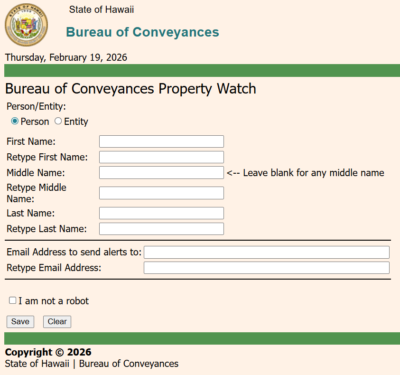
The Hawaii Bureau of Conveyances offers a free email alert system called Property Watch.
Property Watch notifies the registered owner when a document is recorded under that name.
Important boundaries:
-
It does not prevent recording.
-
It does not pre-screen documents.
-
It provides a notification after recording.
Early detection can significantly reduce legal complexity if fraudulent activity occurs.
I registered.
If you own any property in Hawai‘i, this is a simple and responsible step.
Here is Bureu of Conveyance Link.
Practical Steps for Vacant Land Owners
If you own vacant land on the Big Island, especially outside managed subdivisions:
-
Register for Property Watch.
-
Review county property tax records periodically.
-
Confirm that your mailing address is up to date with the County.
-
Be cautious of unsolicited offers.
-
Work only with reputable brokers, title, and escrow professionals.
Real estate transactions should not feel rushed or secretive.
If something feels inconsistent, pause.
In Hawai‘i, trust remains foundational. But verification protects that trust.
Kai Ioh, www.KETeamHawaii.com
Frequently Asked Questions
What types of properties are most commonly targeted in deed fraud?
Vacant lots, unimproved land, and parcels without active monitoring are most commonly targeted.
Are private resort communities like Kukio or Hualālai at risk?
Highly controlled communities with strict oversight are generally less attractive targets due to security scrutiny and layered verification processes.
Does the Hawai‘i Bureau of Conveyances verify ownership before recording?
No. The Bureau verifies technical and notarization compliance, not legal validity or authenticity.
How many documents does the Bureau record annually?
Approximately 344,000 documents per year.
What is Property Watch?
A free email alert service that notifies property owners when documents are recorded under their name.
Does Property Watch prevent fraud?
No. It helps detect activity early after recording.
Is vacant land outside subdivisions more vulnerable?
Yes. Land without HOA oversight or regular monitoring may present greater opportunity for fraudulent activity.