


By Emil Knysh and Kai Ioh
Kai and Emil are luxury real estate advisors based in Kona, Hawai‘i, specializing in resort and ultra-high-net-worth markets across the Big Island.
Executive Summary
-
This page explains how 2024 updates to Hawaiʻi County and State law affect ADUs, second dwellings, and long-term rentals on the Big Island.
-
It is relevant for property owners, buyers, and planners evaluating residential or agricultural land in Kona, Waimea, Waikoloa, and across Hawaiʻi Island.
-
The changes matter now because they expand what is legally buildable, especially regarding the number of dwellings, water use, and septic systems.
-
Together, the new rules remove several long-standing constraints without eliminating the need for zoning and infrastructure review.
Understanding ADUs on the Big Island
What Is an ADU?
An Accessory Dwelling Unit (ADU) is a legally permitted secondary dwelling located on the same parcel as a primary residence. On the Big Island, ADUs are commonly used as detached ʻohana units, guest houses for extended family, or long-term rental units. They are intended to remain accessory to the primary home rather than function as independent subdivisions.
Historically, ADUs were difficult to permit due to zoning limits, water access, and wastewater capacity. Recent legal updates have changed that framework.
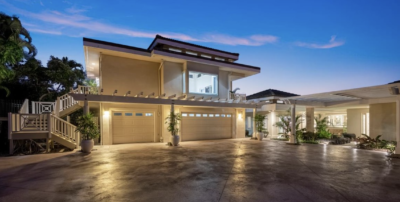
Luxury home with ADU, listing sold by KE Team, Kailua Kona, Hawaii
The Two Laws That Reshaped ADU Rules in 2024
Hawaiʻi County Bill 123
Hawaiʻi County Bill 123 revises county zoning rules related to dwelling counts and infrastructure. Its primary effect is expanding how many dwellings, including ADUs, may be allowed on a single parcel, subject to zoning and technical compliance.
Key changes include clearer allowances for multiple ADUs, recognition of catchment water systems, and updated interpretations of accessory use.
Hawaiʻi State Act 224
State Act 224 addresses wastewater rules rather than zoning. It changes how septic systems are evaluated when multiple dwellings exist on one lot. The focus is no longer the number of structures, but total bedroom count and system capacity.
These two laws operate together. County zoning controls what may be built. State law controls how wastewater systems may serve those structures.
Note: These new County allowances do not override private CC&Rs or subdivision rules, so always check for recorded restrictions.
View the full ordinance here (Hawai‘i County Bill 123)
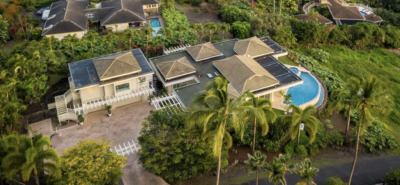
Luxury home with ADU, listing sold by KE Team, Kailua Kona, Hawaii
What Hawaiʻi County Bill 123 Allows
Under current Hawaiʻi County rules, a single parcel may allow:
-
One primary dwelling, subject to zoning limits
-
Up to three ADUs, if zoning, setbacks, and infrastructure allow
-
An ADU attached to each permitted primary dwelling, when multiple primary dwellings are allowed
-
Use of catchment water systems for ADUs
Private covenants, conditions, and restrictions (CC&Rs) or subdivision rules are not overridden by Bill 123. Recorded restrictions still apply and must be reviewed separately.
ADU Size Limits in Practice
State law references a maximum ADU size of 1,250 square feet, but this is not an automatic entitlement. Actual allowable size depends on local zoning and site-specific constraints.
Factors that typically determine ADU size include lot area, zoning designation, height limits, setbacks, lot coverage, and infrastructure capacity. Many properties can support smaller ADUs that remain practical for family use or long-term occupancy.
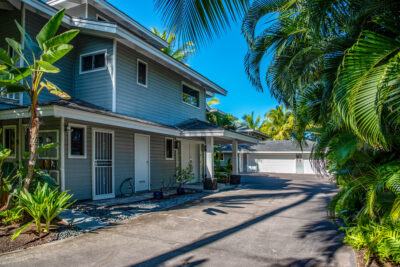
Two full-size legal homes sold by the KE Team in Kona Bay, Kailua Kona, Hawaii
Water Supply Rules for ADUs
One of the most practical updates under Bill 123 is the formal recognition of catchment water systems.
ADUs on the Big Island may be served by:
-
Compliant rainwater catchment systems
-
County water systems, where meters and allocations are available
ADUs are not required to connect to County water if catchment systems meet current standards. In areas with County water, new connections remain subject to availability and approval.
Septic System Rules: Big Changes from State Act 224
This is where State Act 224 really opens the door.
The law now allows:
-
A single septic system (Individual Wastewater System) to serve up to five bedrooms, regardless of how many separate dwellings or ADUs that includes
-
It doesn’t matter whether the units are attached or detached
-
This does not apply to cesspools—only septic or aerobic systems
Key takeaway: It’s no longer about how many buildings you have – it’s about total bedroom count and system capacity.
Read the full law here (State Act 224)

MTF home sold by the KE Team in Kailua Kona, Hawaii
Example Scenarios on the Big Island
1. Kona (RS-Zoned Lot with Septic)
A homeowner with an 8,500 sq. ft. lot in Kailua-Kona can now add a detached 2-bedroom ADU, using catchment water and the existing septic system (as long as the total bedroom count doesn’t exceed five).
2. Waikoloa Village (Large Backyard, RS-10)
A buyer looking at an older home with a big yard can now consider building a long-term rental unit – ADU approval is more feasible, and they may be able to share the existing septic.
3. Waimea Agricultural Lot (1+ Acre)
In Waimea, a rural lot with one home and a 3-bedroom septic could potentially support a second 2-bedroom dwelling – without requiring a second wastewater system.
Why These Changes Matter
The 2024 updates affect how property can be used over time. They allow more flexibility for multigenerational living, long-term rental planning, and future adaptability without requiring subdivision or CPR processes.
However, zoning, infrastructure, and private restrictions still determine real-world feasibility. Properties that appear similar may differ significantly in what they can support.
Frequently Asked Questions
What is an ADU under Hawaiʻi law?
An ADU is a secondary dwelling permitted on the same parcel as a primary residence. It is accessory in use and may be detached or attached, subject to zoning and building rules.
How many ADUs are allowed on one Big Island property?
Hawaiʻi County rules may allow up to three ADUs on a single lot, depending on zoning, lot size, and infrastructure capacity. Not all properties qualify.
Can ADUs use catchment water?
Yes. Hawaiʻi County now clearly allows ADUs to be served by compliant rainwater catchment systems.
Do ADUs require a separate septic system?
Not necessarily. Under State Act 224, one septic or aerobic system may serve up to five bedrooms total across all dwellings.
Does Act 224 allow cesspools?
No. The law applies only to approved septic or aerobic wastewater systems, not cesspools.
Is the 1,250 sq. ft. ADU size guaranteed?
No. The 1,250 square foot figure is a state-level maximum. Actual size is determined by county zoning and site conditions.
Do CC&Rs override County ADU rules?
Yes. Private covenants and subdivision restrictions still apply and may prohibit or limit ADUs regardless of county allowances.
Are these rules already in effect?
Yes. Both Hawaiʻi County Bill 123 and State Act 224 are currently in effect.
Can ADUs be used as long-term rentals?
In many cases, yes. Long-term rental use is generally allowed where zoning permits residential occupancy, but short-term rental rules are separate.
Does zoning still matter with the new laws?
Yes. Zoning remains the primary factor in determining what can be built. The new laws expand possibilities but do not eliminate zoning requirements.
Final Thoughts
This is one of the most meaningful shifts in property flexibility the Big Island has seen in years.
But like everything in Hawaiʻi real estate, it’s nuanced. The best outcomes come from knowing what’s allowed – and what a specific property can actually support.
We maintain a trusted network of:
-
Zoning and planning consultants
-
Engineers and septic specialists
-
Designers and contractors familiar with local permitting
Want to explore ADU-friendly homes on the market?
While we don’t have all the answers, we can guide you to the right path.
Let’s talk about what’s possible – and how to make the most of it.
Contact us for a private consultation!

KE Team Hawaii, Kai and Emil, Big Island, Hawaii